
Search
Enter keywords to search for products, blog posts, and more.
Enter keywords to search for products, blog posts, and more.


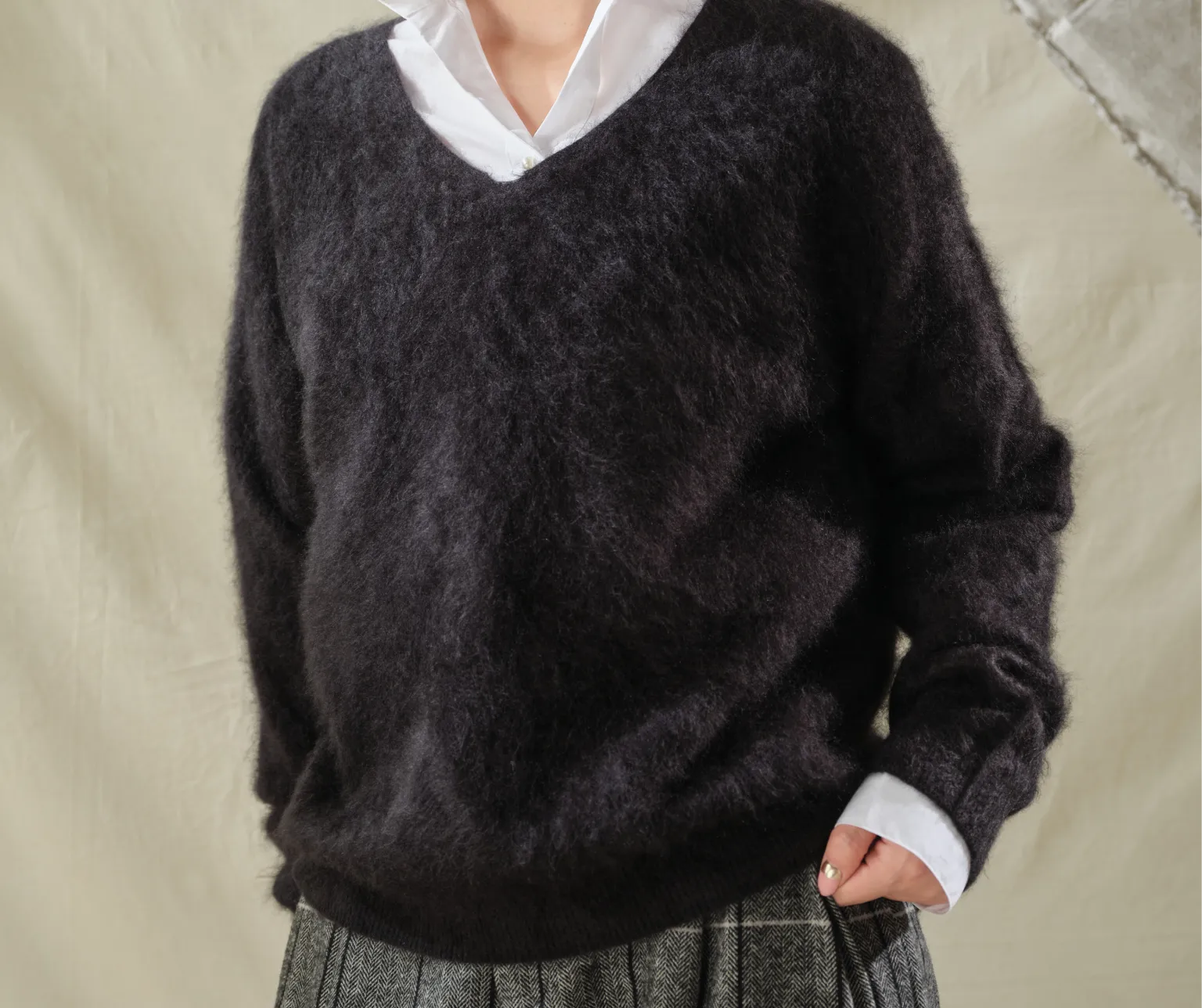
Classic Cashmere V-Neck Sweaters

Deep V-Neck Cashmere Sweaters

Oversized Cashmere V-Neck Sweaters

Cropped Cashmere V-Neck Sweaters

Ribbed Cashmere V-Neck Sweaters

Chunky Knit Cashmere V-Neck Sweaters

Relaxed Fit Cashmere V-Neck Sweaters

Heavyweight Cashmere V-Neck Pullovers
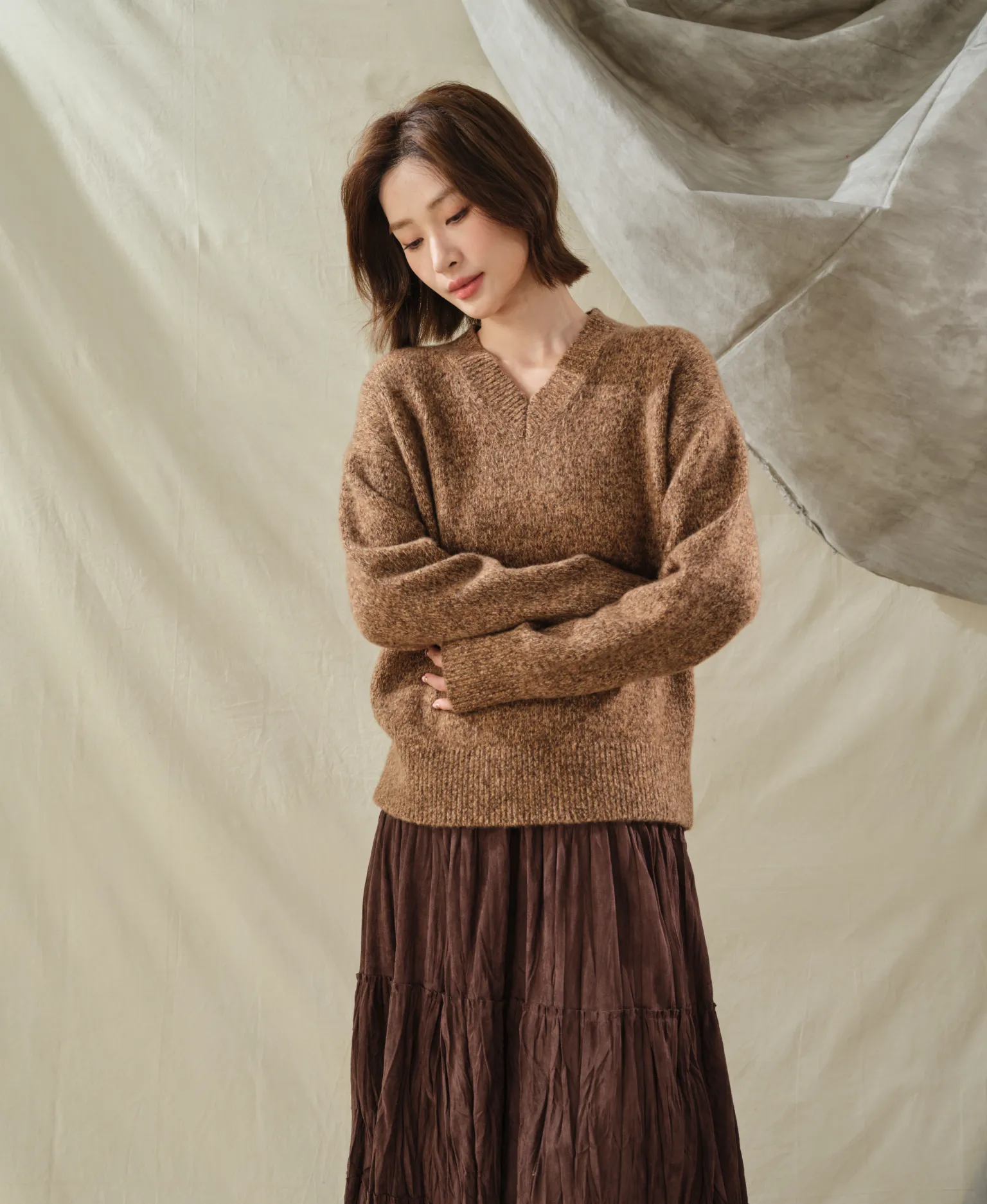
The V-point is the weakest structural point of this silhouette. We reinforce it with single-stitch linking and program the collar trim tension separately from the body so the neckline lies flat without gaping. Production runs through our audited partner network, with shrinkage rates built into the knitting program and dimensional checks after washing.
We prevent neckline distortion through strict tension programming on the knitting machines and precise single-stitch linking during assembly. By calculating the exact elasticity required for the ribbed trim, the collar maintains its structural memory and lays flat against the chest through repeated wear.
Yes, our technical development team can execute any specific neckline depth. Whether your tech pack requires a standard, conservative V-neck for corporate collections or a dramatic, deep-plunging V-neck for contemporary fashion lines, we engineer the collar structure to support the design without sagging.
Prototype sampling usually takes 7 to 14 days when utilizing our extensive inventory of stock yarn colors. Following sample approval, bulk production typically requires 30 to 45 days, depending on the complexity of the design, gauge requirements, and overall order volume.
We control sizing consistency by factoring precise shrinkage rates into our initial computerized knitting programs. Following the wet-milling process, every bulk order is subjected to comprehensive dimensional audits on light tables to verify strict adherence to your approved grading rules before packaging.
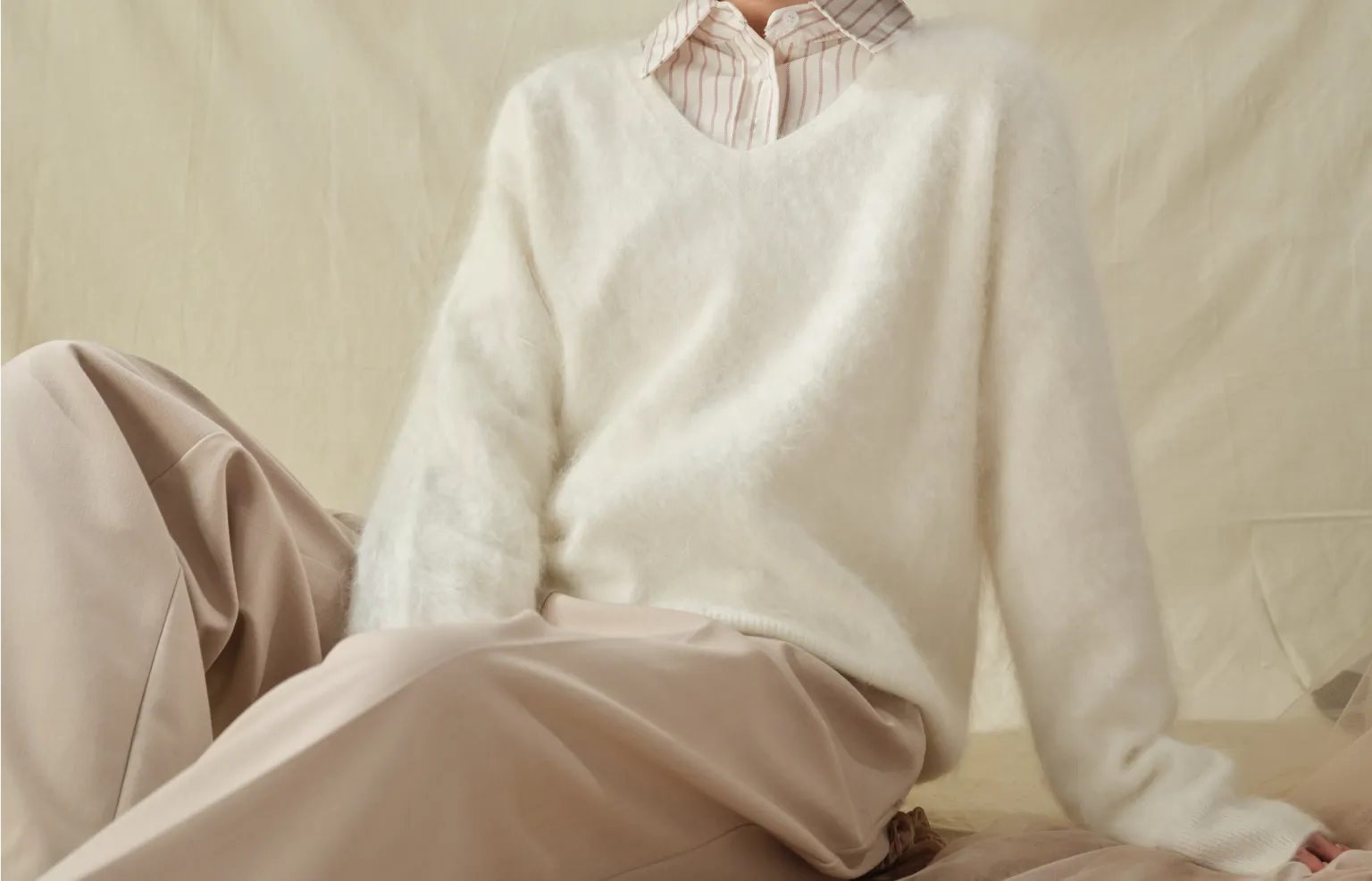
A V-neck sweater is judged within seconds by how the neckline sits: flat against the chest, symmetric at the point, stable after washing. These qualities are not finishing details — they are determined by decisions made during knitting programming and assembly, and buyers specifying V-neck programs should treat the neckline as a measurable construction item.
The V-point. The lowest point of the V is where two diagonal collar trims meet at an acute angle. This junction concentrates stress and is the first place a poorly made V-neck shows distortion. The professional solution is single-stitch linking at the point, with trim tension calculated so the two legs meet without puckering or a visible step. The difference is visible on the hanger and still visible after twenty washes.
Gaping and its causes. A neckline that stands away from the chest usually traces to one of three causes: trim knitted too loose relative to the body, insufficient trim width for the neckline depth, or shrinkage mismatch between trim and body fabric. All three are development-stage variables. Trim tension should be sampled on the actual body fabric, because the same trim behaves differently on a 16gg jersey body and a 7gg rib body.
Depth as a specification. V depth should be stated in centimeters from the high shoulder point, not described in words. A two-centimeter difference separates a corporate-appropriate neckline from a fashion neckline, and grading must hold the depth relationship across sizes. Our crew neck range is often developed alongside V-necks in the same program, since the two silhouettes share body blocks and can be knitted from the same yarn lot.
Measurement discipline. V-neck programs benefit from light-table measurement after washing: neckline depth, trim width, and collar circumference checked against the approved spec. Buyers building the underlying documentation will find the structure in our tech pack guide, and wholesale programs with locked specifications can be scheduled through our wholesale service for repeat seasonal runs.
Specified this way, a V-neck becomes a repeatable product rather than a sampling lottery — which is the baseline requirement for any silhouette expected to run for multiple seasons.
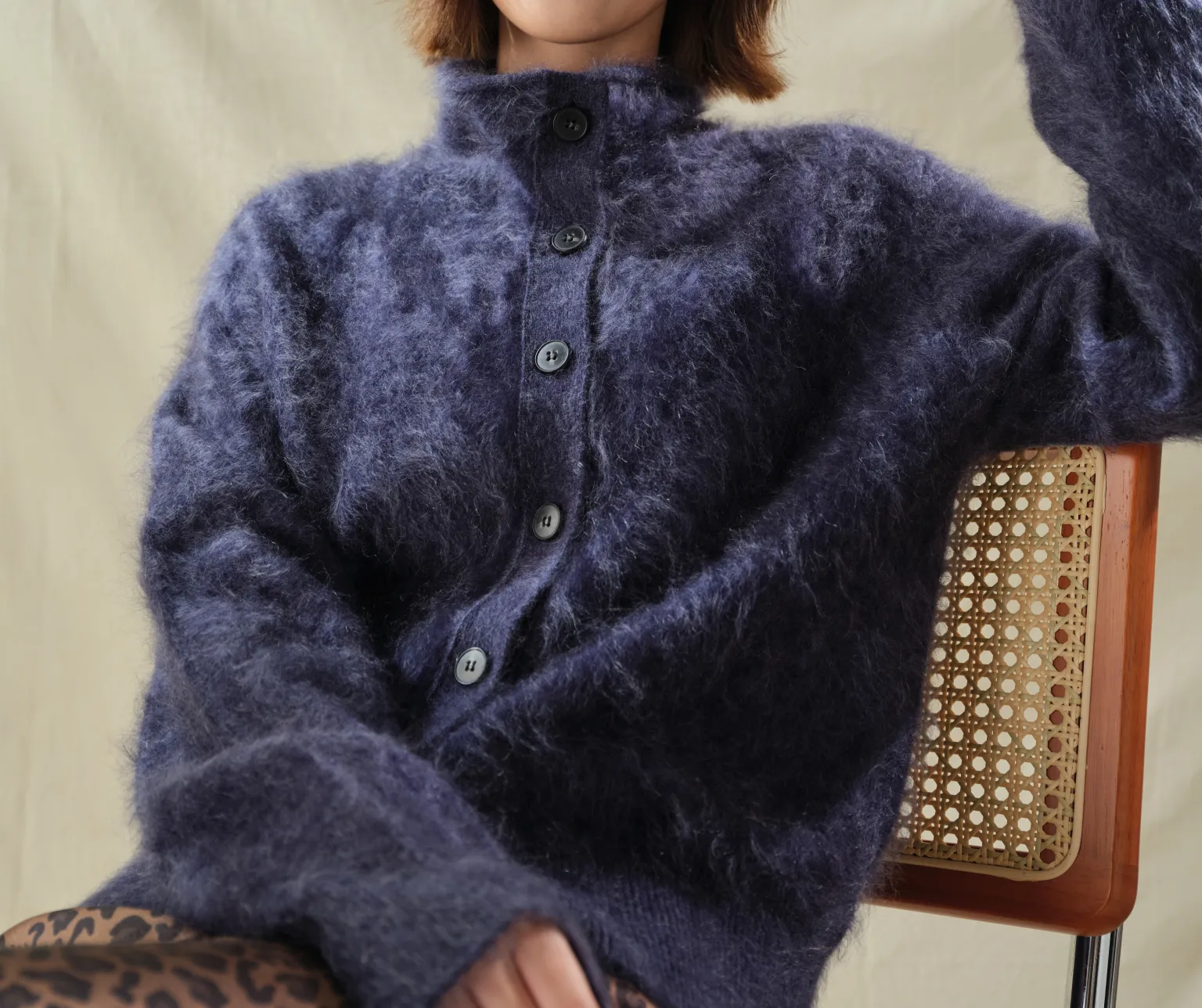
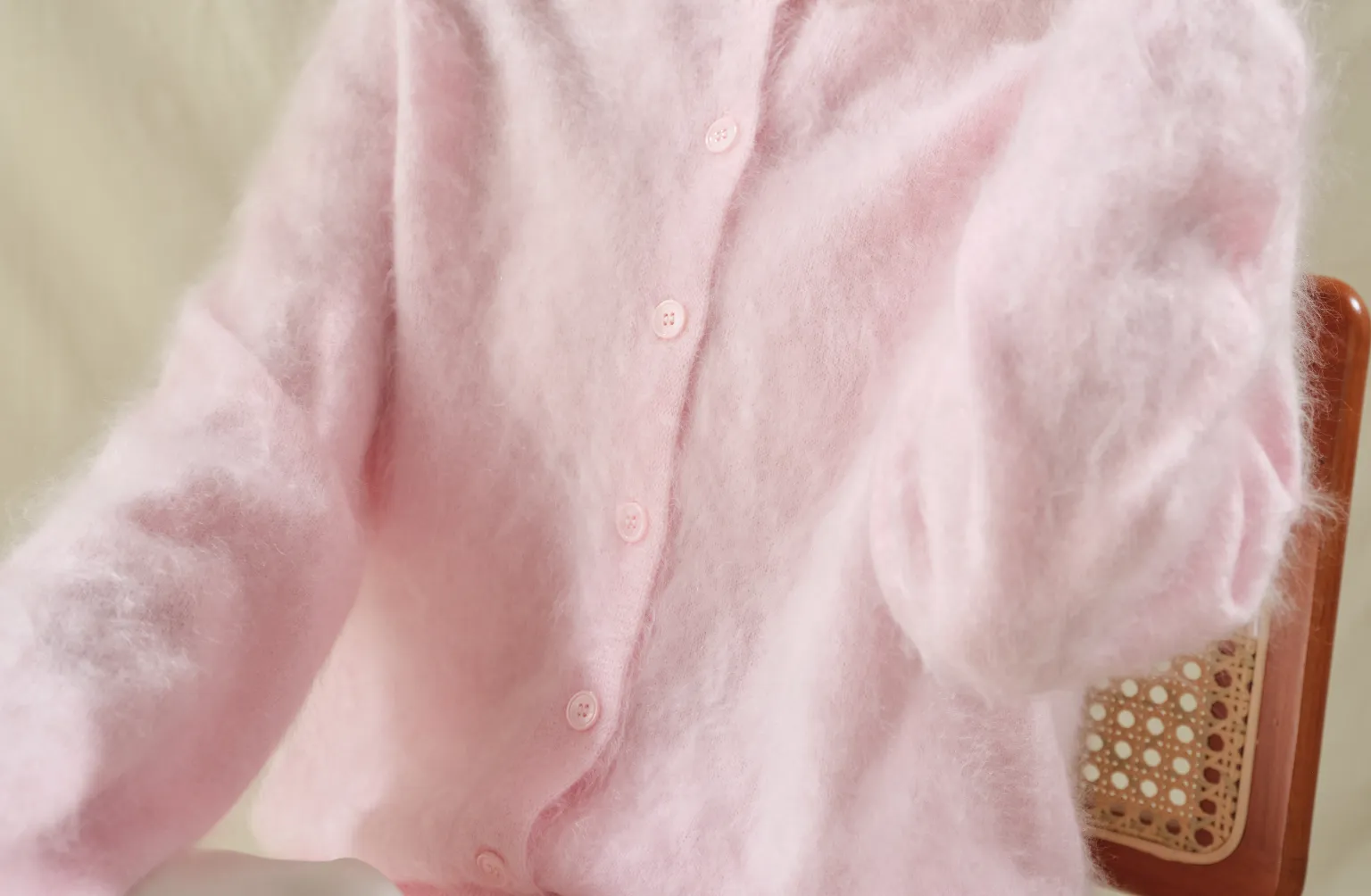
Brushed and blended variants. Deep-V fashion styles are increasingly specified in brushed cashmere, where the raised nap softens the neckline edge visually. Brushed trims need firmer linking to control fiber release at the V-point, and silk-cashmere blends offer an alternative for fine-gauge V-necks where a lustrous surface and fluid drape are the design priority.